60kW, 120kW & 240kW DC Fast Chargers: Understanding the Technology Behind Modern EV Charging Infrastructure
From 60kW dual-gun DC chargers to 120kW high-power systems and 240kW-class charging infrastructure, explore the power electronics, CCS2 architecture and electrical design behind commercial EV charging hubs.
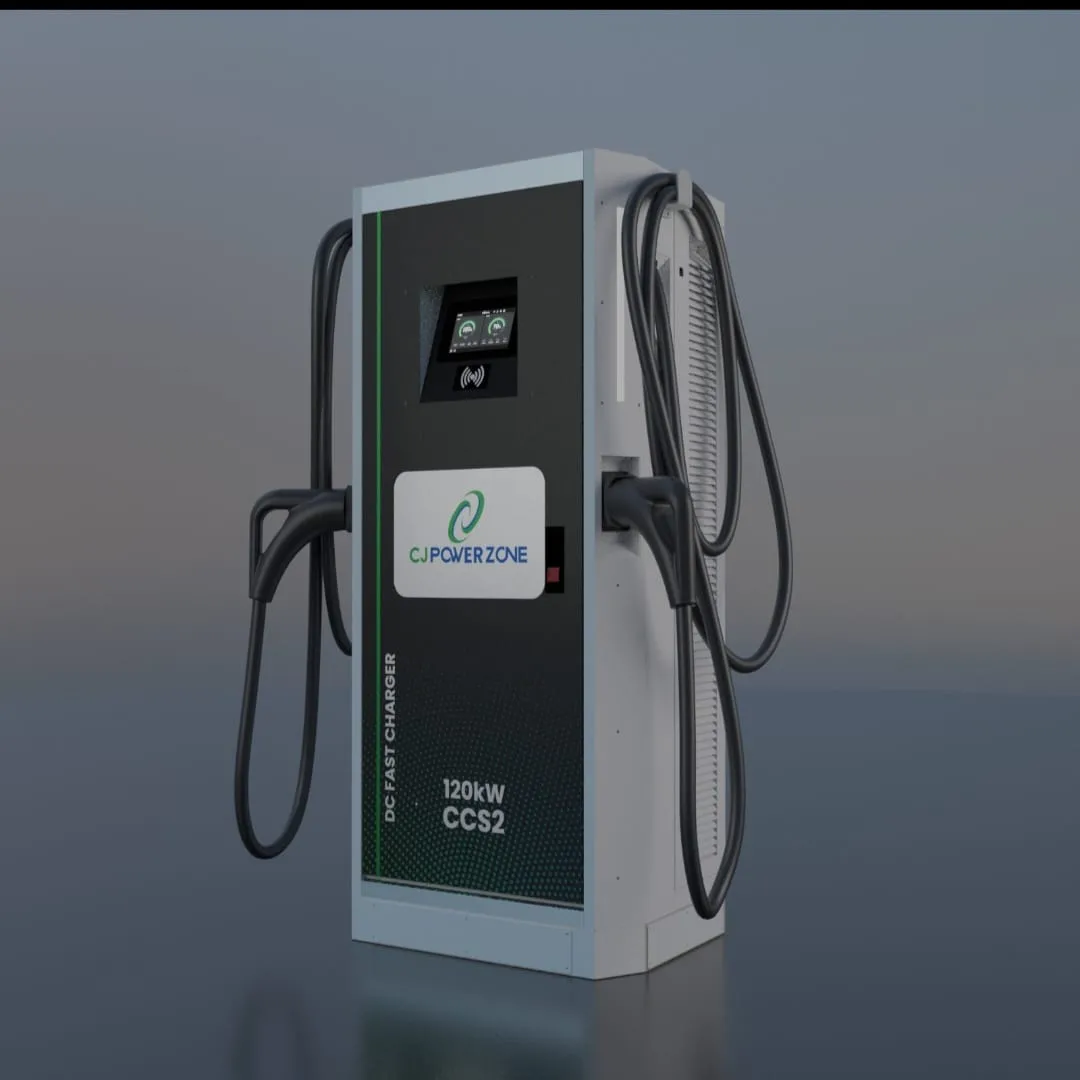
120kW-class CCS2 DC fast charging infrastructure.
The rapid adoption of electric vehicles is changing the way energy infrastructure is designed.
A modern EV charging station is no longer simply a charger connected to an electrical outlet. At commercial scale, it is an integrated electrical, power-electronics, communication, protection and energy-management system.
From 60kW dual-gun DC chargers to 120kW high-power systems and 240kW-class charging infrastructure, the fundamental objective remains the same:
Convert grid AC power into controlled DC power and safely deliver it to an electric vehicle through the CCS2 charging interface.
At Altarbyte, we look at EV charging infrastructure from the complete system perspective — from HT electrical infrastructure and transformer sizing through charger deployment, civil works, protection systems, software integrations, payment integration and commissioning.
What is a DC Fast Charger?
A DC fast charger, also known as a DC EV charger, converts electrical power from the AC grid into DC power that can be supplied directly to the vehicle's high-voltage battery.
Unlike AC charging, where the vehicle's onboard charger performs the AC-to-DC conversion, a DC fast charger performs this conversion externally.
A simplified architecture looks like this:
              GRID
        3-Phase AC Supply
               │
               ▼
      ┌─────────────────┐
      │ AC Protection   │
      │ MCCB / SPD etc. │
      └────────┬────────┘
               │
               ▼
      ┌─────────────────┐
      │ AC → DC POWER   │
      │    MODULES      │
      └────────┬────────┘
               │
               ▼
          DC BUS
               │
       ┌───────┴────────┐
       │                │
       ▼                ▼
    DC Gun 1         DC Gun 2
       │                │
       └───────┬────────┘
               ▼
             EV
The actual charger also incorporates control electronics, metering, communication, safety monitoring and switching equipment.
60kW DC Fast Charging: The Foundation
A 60kW DC charger represents one of the most common power classes for commercial EV charging applications.
An ARAI test report for a 60kW CCS2 DC charger describes a 60kW maximum DC output, a three-phase, five-wire AC supply, two independent DC outputs and CCS2 connections.
The declared output configuration allows:
- CCS2 output 1 — up to 30kW during simultaneous operation
- CCS2 output 2 — up to 30kW during simultaneous operation
- Up to 60kW from an individual gun
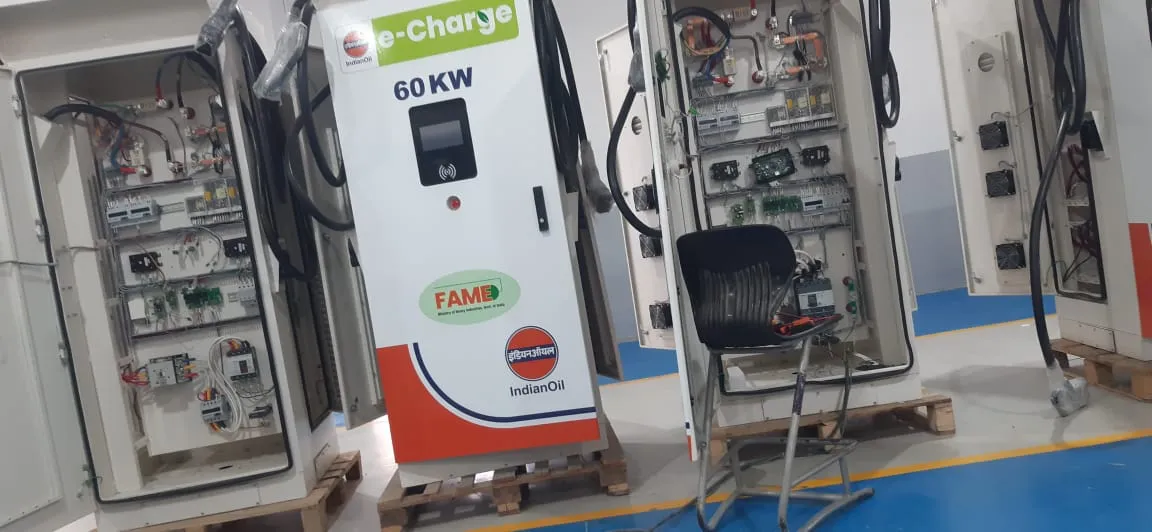
60kW dual-gun CCS2 DC fast charger power modules.
Why dual-gun charging matters
Dual-gun architecture allows a charging station to serve more than one vehicle. For example:
                 60kW CHARGER
                      │
              ┌───────┴───────┐
              │               │
           CCS2 #1         CCS2 #2
             30kW             30kW
              │               │
             EV              EV
Alternatively, depending on the charger's architecture and control strategy, the available power can be concentrated on a single vehicle.
This makes power-sharing architecture an important consideration when selecting chargers for commercial charging hubs.
120kW DC Fast Charging
Moving from 60kW to 120kW significantly changes the power-conversion architecture and the electrical infrastructure required around the charger.
An ARAI report for a 120kW CCS2 charger identifies:
- 415V AC, three-phase + neutral + PE input
- CCS2 outputs
- 150–1000V DC output range
- up to 150A maximum output current
- 120kW maximum power on a single gun
- 60kW + 60kW during simultaneous dual-gun operation
- four 30kW power modules
- forced-air cooling
120kW DC fast charger power modules.
The power-module approach
The 120kW architecture described in the report uses:
4 × 30kW power modules
             415V AC
                │
        AC INPUT PROTECTION
                │
                ▼
       ┌──────────────────┐
       │ 30kW POWER MODULE │
       ├──────────────────┤
       │ 30kW POWER MODULE │
       ├──────────────────┤
       │ 30kW POWER MODULE │
       ├──────────────────┤
       │ 30kW POWER MODULE │
       └─────────┬────────┘
                 │
              DC BUS
                 │
        ┌────────┴────────┐
        │                 │
       CCS2              CCS2
      60/120kW          60kW
The important engineering concept is modularity. Instead of designing one enormous power converter, multiple power modules can be combined to create the required charger capacity.
From 120kW to 240kW
As charging power increases, the power electronics become increasingly modular.
The ARAI compliance statement for the 240kW charger identifies:
- 415V, 3-phase + N + PE input
- 240kW output
- two CCS2 DC outputs
An ARAI extension report provides another useful illustration of this modular approach. The report identifies an approved 240kW dual-gun configuration with eight 30kW power modules. It also records an 180kW dual-gun variant using six 30kW modules, with the rest of the charger configuration and enclosure declared unchanged.
That gives us a simple illustration:
60 kW
│
├── 2 × 30kW modules
│
└── 60kW total


120 kW
│
├── 4 × 30kW modules
│
└── 120kW total


180 kW
│
├── 6 × 30kW modules
│
└── 180kW total


240 kW
│
├── 8 × 30kW modules
│
└── 240kW total
This is one of the most important concepts in modern DC fast-charging design:
Higher charging power can be achieved by increasing the number of modular power-conversion units.
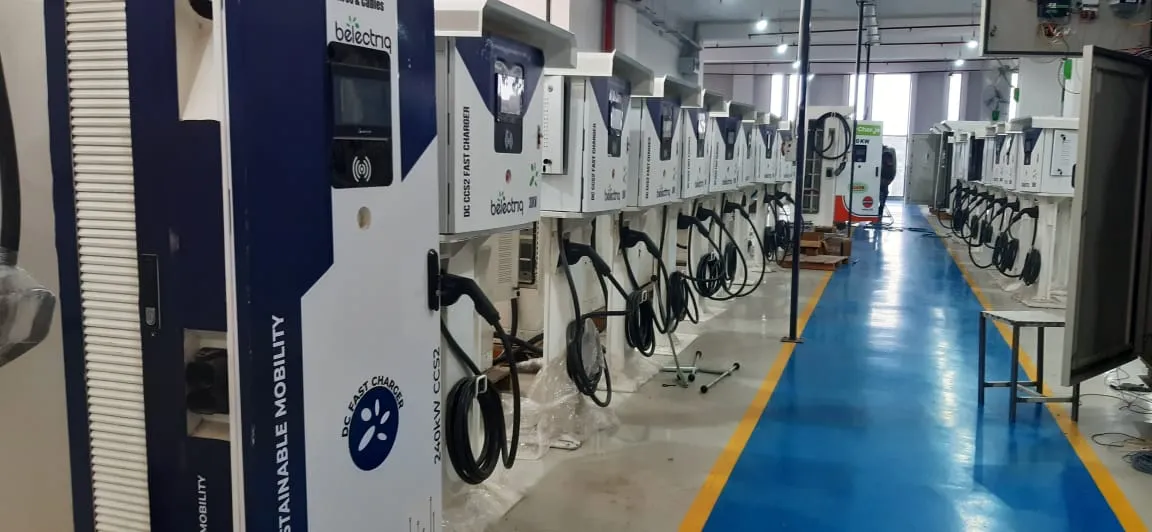
240kW high-power DC fast charger modular architecture.
What Is Inside a DC Fast Charger?
A commercial DC fast charger contains substantially more than the CCS2 connector visible from the outside.
A simplified internal architecture can be represented as:
                 AC GRID
                   │
                   ▼
        ┌─────────────────────┐
        │ MCCB / AC PROTECTION│
        └──────────┬──────────┘
                   │
                   ▼
        ┌─────────────────────┐
        │ SURGE / EMI         │
        │ PROTECTION          │
        └──────────┬──────────┘
                   │
                   ▼
        ┌─────────────────────┐
        │ AC CONTACTOR        │
        └──────────┬──────────┘
                   │
                   ▼
        ┌─────────────────────┐
        │ POWER MODULE ARRAY  │
        │                     │
        │ 30kW + 30kW + ...   │
        └──────────┬──────────┘
                   │
                   ▼
                DC BUS
                   │
          ┌────────┴────────┐
          │                 │
          ▼                 ▼
      DC PROTECTION     DC PROTECTION
          │                 │
          ▼                 ▼
       DC METER           DC METER
          │                 │
          ▼                 ▼
       CCS2 GUN          CCS2 GUN
          │                 │
          └────────┬────────┘
                   ▼
                  EV
The charger also needs a control system coordinating:
- Vehicle communication
- Power-module control
- Contactor operation
- Metering
- Charging authorization
- Fault handling
- Emergency shutdown
- Backend communication
- Charging-session records
The 60kW ARAI report, for example, identifies an integrated metering system and transmission of charging-session and energy-consumption information to the CMS through OCPP 1.6.
CCS2: The Interface Between Charger and Vehicle
The CCS2 connector is the interface through which the DC charger communicates with and supplies power to the vehicle.
A commercial CCS2 system isn't simply a positive and negative DC cable. The charging process involves communication and safety checks before high-power DC energy is delivered.
The overall sequence can be simplified as:
Vehicle Connected
       │
       ▼
Connector Detection
       │
       ▼
Communication
       │
       ▼
Safety Checks
       │
       ▼
Pre-charge
       │
       ▼
Contactor Activation
       │
       ▼
DC Power Delivery
       │
       ▼
Continuous Monitoring
       │
       ▼
Charging Complete
       │
       ▼
Power Shutdown
       │
       ▼
Connector Release
This is why a DC fast charger is effectively a combination of power electronics + electrical protection + embedded controls + communications + EVSE hardware.
The Electrical Infrastructure Behind a 120kW or 240kW Charger
The charger is only one part of a commercial EV charging station.
For an EV charging hub, the upstream infrastructure can include:
                 UTILITY GRID
                      │
                      ▼
                HT CONNECTION
                      │
                      ▼
                HT METERING
                      │
                      ▼
                HT PROTECTION
                      │
                      ▼
               TRANSFORMER
                      │
                      ▼
                 LT PANEL
                      │
            ┌─────────┼─────────┐
            │         │         │
            ▼         ▼         ▼
         60kW      120kW      240kW
        CHARGER    CHARGER    CHARGER
This is where charger selection becomes an EPC engineering decision, rather than simply a procurement decision.
The total connected load, transformer capacity, cable sizing, protection coordination, earthing, lightning protection, voltage drop, thermal conditions and site layout all have to be considered together.
Air Cooling and Thermal Management
Power conversion generates heat. As charger capacity increases, thermal management becomes increasingly important.
The 120kW ARAI report identifies the charger as forced-air cooled, with an IP55 enclosure classification for outdoor use.
That means charger design has to account for:
- Power-module heat generation
- Heatsinks
- Cooling fans
- Airflow
- Ambient temperature
- Dust
- Enclosure protection
- Maintenance access
For an EV charging hub in India's climatic conditions, thermal design is particularly important for maintaining charger availability and power output.
60kW vs 120kW vs 240kW
| Parameter | 60kW | 120kW | 240kW |
|---|---|---|---|
| Typical application | Commercial / fleet | High-use public charging | High-power charging hub |
| CCS2 | ✓ | ✓ | ✓ |
| Dual gun | ✓ | ✓ | ✓ |
| Modular power conversion | 2 × 30kW | 4 × 30kW | 8 × 30kW |
| Maximum charger output | 60kW | 120kW | 240kW |
| Simultaneous charging | 30kW + 30kW | 60kW + 60kW | Model-dependent |
| Input | 415V 3-phase | 415V 3-phase | 415V 3-phase |
| Application | Charging station | Charging hub | High-power charging hub |
The 60kW and 120kW figures above are directly reflected in the respective ARAI reports; the 240kW figure is reflected in the compliance statement and the modular configuration documented in the extension report.
Why Charger Power Is Only One Part of the Equation
A 240kW charger doesn't automatically mean a charging station is capable of delivering 240kW efficiently under every operating condition.
The complete infrastructure has to be designed around:
Grid capacity → transformer → switchgear → cables → charger → power modules → CCS2 → vehicle battery
For example, a high-power charging hub may require:
- HT electrical connection
- Transformer
- HT/LT switchgear
- Protection systems
- LT distribution
- Charger DBs
- Power cables
- Earthing network
- Lightning protection
- Civil foundations
- Cable trenches
- Bollards
- Charger communication network
- Monitoring system
- Payment/RFID system
- OCPP backend integration
- Site lighting
- Fire and safety systems
This is where a turnkey EV charging EPC approach becomes valuable.
Designing the Right EV Charging Hub
There is no universal "best" charger. A 60kW charger may be ideal for one application, while a fleet depot may benefit from 120kW or higher power.
The right design depends on:
- Vehicle type
- Battery capacity
- Expected dwell time
- Daily energy demand
- Number of vehicles
- Simultaneous charging requirement
- Available grid capacity
- Land constraints
- Transformer capacity
- Future expansion
- Business model
The objective should therefore be to design the charging ecosystem, rather than simply purchase the highest-rated charger available.
The Future of EV Charging Infrastructure
The progression from 60kW to 120kW and 240kW illustrates a broader movement in the EV industry:
More power → modular power electronics → smarter load management → higher station utilization.
At the same time, charging infrastructure is increasingly becoming an energy-management platform.
Future charging hubs can integrate:
- Renewable energy
- Battery energy storage
- Dynamic load management
- Energy management systems
- Solar generation
- Fleet management
- OCPP-based backend systems
- Demand management
- Smart charging
- Vehicle-to-grid technologies
The charger becomes one component within a larger energy ecosystem.
Altarbyte: Engineering the Complete EV Charging Infrastructure
At Altarbyte, our focus is not limited to supplying a charger. We approach EV charging as a complete infrastructure project — from electrical engineering and site planning to charger deployment and commissioning.
Our turnkey approach can encompass:
Site Assessment → Electrical Design → HT Infrastructure → Transformer → LT Distribution → Civil Works → EV Chargers → Protection → Networking → Commissioning
The goal is simple:
Build EV charging infrastructure that is electrically engineered, scalable, reliable and ready for future expansion.
Final Takeaway
The difference between a 60kW, 120kW and 240kW DC fast charger is not simply the number printed on the front panel.
Behind the cabinet is an integrated system of:
Power modules + DC bus + protection + switching + metering + thermal management + communication + CCS2 control.
And behind the charger itself is another infrastructure layer:
Grid + HT yard + transformer + LT distribution + cables + earthing + protection + civil infrastructure + networking.
That is why successful EV charging deployment requires more than charger procurement. It requires end-to-end EV charging infrastructure engineering.
Altarbyte — Turnkey EV Charging Infrastructure.
Share This Article
Related Articles
The Future of Fast Charging: What to Expect in 2026
Explore the latest advancements in DC fast charging technology and how they are revolutionizing EV infrastructure.
DC Fast Chargers
Explore Altarbyte's range of DC fast chargers from 60kW to 240kW for commercial EV charging stations.
EV Charging Case Studies
Real-world examples of successful EV charging deployments and infrastructure projects across India.
Powering India's EV Revolution
Explore Altarbyte's range of DC fast chargers and EV charging solutions. Get expert guidance on selecting the right charging technology for your needs.
Compliance & Certification
Altarbyte products and installations are fully compliant with Indian regulatory requirements and international standards.