EV Charging Station Transformer Requirement Guide
Comprehensive guide to transformer requirements for EV charging stations in India. Calculate transformer capacity for DC fast chargers, AC chargers, fleet charging depots, and commercial installations.
Why Transformer Sizing Matters for EV Charging
Transformer sizing is one of the most critical engineering decisions in EV charging infrastructure design. An undersized transformer causes voltage drops, overheating, and potential equipment damage, while an oversized transformer increases capital costs unnecessarily. Proper transformer sizing ensures reliable operation, protects your investment, and maximizes charger availability.
In India's rapidly expanding EV market, transformer capacity has become a significant bottleneck for charging station deployment. DISCOMs across Telangana, Andhra Pradesh, and other states have specific requirements for grid connection, load factor calculations, and diversity considerations that must be addressed during the planning phase.
Transformer Sizing Methodology
Calculating the correct transformer size for an EV charging station requires analyzing peak demand, diversity factors, future expansion plans, and local grid conditions. The methodology involves summing the rated power of all chargers, applying a diversity factor based on expected utilization patterns, and adding headroom for future growth.
- Calculate total charger power demand: Sum the rated power output of all chargers in the installation. For example, four 120kW chargers have a combined rated output of 480kW.
- Account for diversity and load factors: Not all chargers operate at full rated power simultaneously. Typical diversity factors range from 0.6 to 0.8 depending on station type and expected utilization.
- Consider future expansion capacity: Factor in planned charger additions over the next 3-5 years to avoid costly transformer upgrades later.
- Coordinate with DISCOM for grid connection: Engage the local distribution company early in the process to understand grid capacity, connection requirements, and approval timelines.
Transformer Sizing by Charger Configuration
Different charger configurations require different transformer capacities. A single 120kW DC fast charger typically requires a 315kVA-500kVA transformer, while a 240kW ultra-high-power charger may need a 500kVA-1000kVA transformer. For fleet depots with multiple chargers, transformer requirements scale accordingly, with additional considerations for simultaneous charging and peak load management.
Grid Impact Studies and DISCOM Approvals
Beyond transformer sizing, EV charging infrastructure requires comprehensive grid impact studies. These studies assess the effect of charging load on local distribution networks, identify required network reinforcements, and ensure compliance with state electricity regulations. Altarbyte's engineering team conducts detailed grid studies and manages the complete DISCOM approval process, including documentation submission, technical reviews, and final connection agreements.
Case Studies: Transformer Deployments
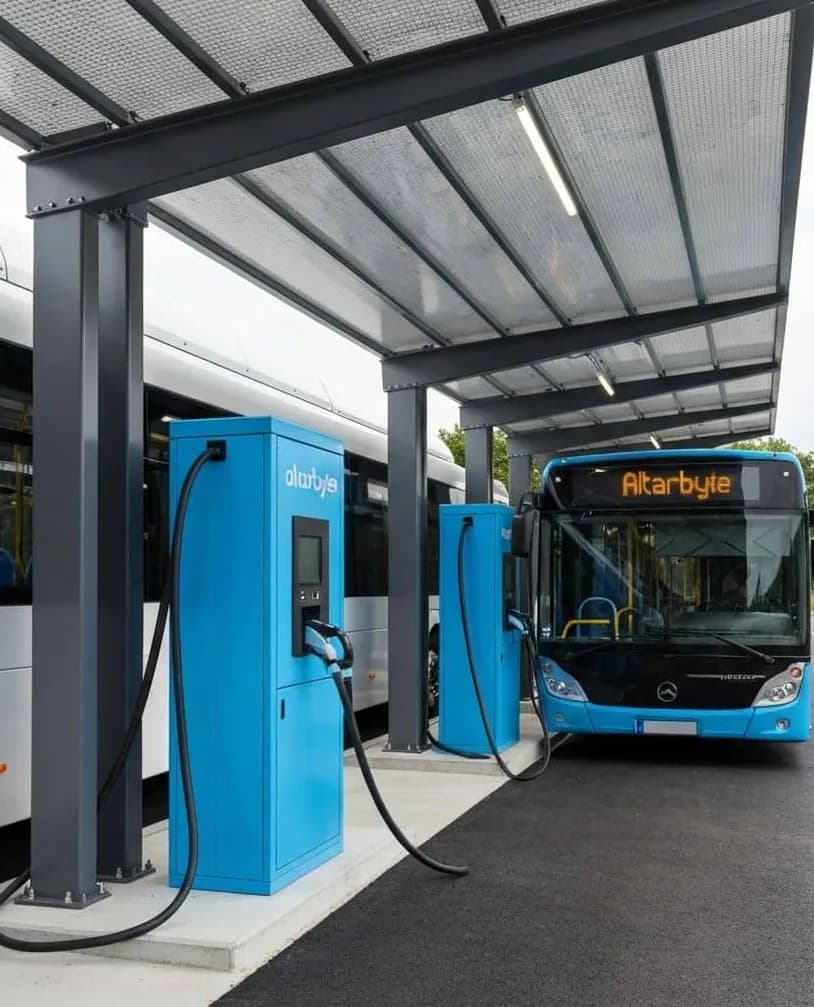
Altarbyte has successfully deployed transformers ranging from 100kVA for small residential charging installations to 2000kVA for large bus depot electrification projects. Our portfolio includes transformer installations for highway charging corridors in Telangana, fleet charging depots in Hyderabad, and bus electrification projects for APSRTC in Andhra Pradesh.
Share This Article
Need Help with Transformer Planning?
Our engineering team provides detailed transformer sizing, grid impact studies, and DISCOM coordination for EV charging projects across India.
Compliance & Certification
Altarbyte products and installations are fully compliant with Indian regulatory requirements and international standards.